Secret Societies and Demonic Rituals: The Hellfire Club

uberpreneurs.com – The Hellfire Club, a name that evokes images of clandestine meetings and forbidden rituals, has long been a subject of fascination and speculation. This article delves into the murky world of secret societies, exploring the origins, activities, and the enduring myths surrounding the Hellfire Club.

Origins of the Hellfire Club

The term “Hellfire Club” is most famously associated with an 18th-century British aristocratic group that engaged in debauchery and blasphemous activities. The club was founded by Sir Francis Dashwood, a politician and libertine, who sought to create a space for the elite to indulge in hedonistic pleasures away from the prying eyes of society. The club’s activities were rumored to include mocking religious rituals, orgies, and other forms of debauchery.

The Hellfire Club’s Activities

The Hellfire Club met in various locations, including the infamous Medmenham Abbey, which was converted into a temple of Bacchus and Venus. The members, who included politicians, artists, and other influential figures, would dress in monastic robes and engage in mock religious ceremonies that often had a distinctly pagan or satanic flavor.

Despite the rumors of demonic rituals, it’s important to note that the historical Hellfire Club’s activities were more about challenging societal norms and engaging in hedonism rather than practicing actual satanism. The club’s blasphemous acts were a form of rebellion against the strict moral codes of the time.

The Mythology Surrounding the Hellfire Club

Over the years, the Hellfire Club has become shrouded in myth and legend. Stories of devil worship, black masses, and other sinister activities have been attributed to the club, fueling the public’s fascination with secret societies and the occult.

The truth, however, is often less sensational. The Hellfire Club was more a product of its time—a reaction against the rigid social and religious structures of 18th-century Britain. The club’s members were not devil worshippers but rather individuals seeking to explore the boundaries of pleasure and transgression in a controlled environment.

The Legacy of the Hellfire Club

The legacy of the Hellfire Club lives on in popular culture, with numerous books, films, and television shows drawing inspiration from its notorious reputation. The club has become a symbol of the allure and danger of secret societies, representing both the desire for freedom from societal constraints and the potential for moral decay.

In conclusion, the Hellfire Club remains a captivating subject, embodying the complex interplay between power, pleasure, and rebellion. While the historical reality may not match the sensational stories that have been told, the Hellfire Club continues to fascinate and intrigue, serving as a reminder of the enduring appeal of the forbidden and the mysterious.

Haunted Highways: Tales from America’s Phantom Roads

uberpreneurs.com – The allure of the open road has long been a staple of American culture, symbolizing freedom, adventure, and the promise of the unknown. However, for some, the asphalt ribbons that stretch across the United States harbor more than just the dreams of travelers; they are believed to be haunted by the spirits of the past, creating tales that have become the stuff of legend. These haunted highways, or “phantom roads,” as they are sometimes called, are the backdrop for countless ghost stories that have been passed down through generations.

One of the most famous haunted highways is the stretch of Route 66 that runs through the town of Jericho, Arizona. This section of the historic route is said to be haunted by the spirits of a family who perished in a fiery car crash. Witnesses claim to have seen apparitions of the family, including a young girl in a white dress, wandering along the side of the road, searching for help that never came. The legend is so pervasive that it has inspired books, movies, and even a television series.

In Texas, the story of the Phantom 309 is a tale that has been told for decades. The legend goes that a truck driver, known as the Phantom 309, was killed in a fiery crash on Highway 309. Since then, truckers have reported seeing a ghostly truck with the number 309 on its side, barreling down the highway at night. Some say the Phantom 309 is searching for his final resting place, while others believe he is warning drivers of impending danger.

Maryland’s Route 97, also known as “Hell’s Highway,” has its own share of ghostly tales. The most famous of these involves the White Lady of Churchton, a woman who is said to have been struck and killed by a car while trying to cross the road. Her ghost is often seen by motorists, dressed in a flowing white gown, wandering the side of the road or hitchhiking. Some believe she is searching for her lost child, while others think she is trying to warn drivers of the dangers that lie ahead.

The Oregon Vortex, located near Gold Hill, is another mysterious location that has puzzled visitors for years. This area is known for its strange gravitational anomalies, but it is also rumored to be haunted. Legend has it that the spirits of miners who died in the area still roam the grounds, and visitors have reported feeling an eerie presence and hearing disembodied voices.

In California, the stretch of Highway 1 that runs through the town of Gaviota is said to be haunted by the ghost of Julia Pfeiffer Burns. Burns was a photographer who captured unique and important moments in the area, and after her death, her spirit is believed to continue her work. Motorists have reported seeing a ghostly figure with a camera along the highway, and some have even found unexplained photographs in their cars after driving through the area.

These tales of haunted highways are not just stories; they are a part of America’s cultural heritage, blending the allure of the road with the fascination of the supernatural. Whether these tales are based on fact or fiction, they continue to captivate the imaginations of those who dare to drive the phantom roads of America. As the sun sets and the shadows grow long, the spirits of the past may still be found lingering on these lonely stretches of highway, waiting for the next traveler to pass by and carry on their legend.

Mystical Phenomenon: The Weeping Icons of Orthodox Christianity

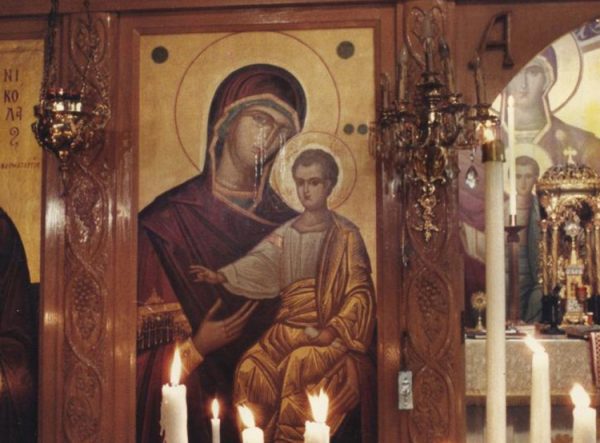
uberpreneurs.com – In the rich tapestry of Orthodox Christianity, icons are not mere artworks but sacred windows into the divine. Among the most awe-inspiring phenomena associated with these venerated images are the so-called “weeping icons” – icons that mysteriously exude moisture, often interpreted as tears. This phenomenon has occurred throughout history, captivating the faithful and sparking debates among skeptics and believers alike. This article delves into the significance, history, and impact of the weeping icons in Orthodox Christianity.

The Significance of Icons in Orthodoxy:
Before exploring the phenomenon of weeping icons, it’s essential to understand the role of icons in Orthodox Christianity. Icons are considered sacred images that make the divine visible. They are used in worship and prayer, serving as a means of connecting with the holy figures they represent. The Orthodox Church teaches that icons are not mere representations but windows into the heavenly realm, through which the divine can manifest.

The Phenomenon of Weeping Icons:
Weeping icons are those that inexplicably exude moisture, often from the eyes, giving the appearance of tears. This phenomenon has been documented in various parts of the world, with the most famous occurrences reported in Eastern Europe, the Middle East, and Russia. The tears are sometimes collected and believed to have miraculous properties, capable of healing the sick or performing other wonders.

Historical Accounts:
Historical records of weeping icons date back centuries. One of the most famous incidents occurred in the 14th century with the “Weeping Madonna of Syracuse” in Italy. More recently, in 1995, the “Weeping Icon of the Mother of God” in Novosibirsk, Russia, attracted international attention when it reportedly wept for several days. These events are often seen as divine messages or signs, prompting reflection and prayer among the faithful.

Interpretations and Beliefs:
The interpretation of weeping icons varies among believers. Some see them as direct interventions of the saints or the Theotokos (Mother of God) in human affairs, offering comfort, warning, or guidance. Others view them as miracles that reaffirm their faith and the power of prayer. The Orthodox Church is generally cautious in its approach, investigating such occurrences to discern their authenticity and spiritual significance.

Scientific and Skeptical Perspectives:
From a scientific perspective, there are various attempts to explain the phenomenon of weeping icons. These range from natural explanations, such as condensation or the seepage of wood resins, to more skeptical views that attribute the phenomenon to human manipulation or mass hysteria. Despite these explanations, the faithful often view such rationalizations as missing the spiritual essence of the event.

The Impact on Believers:
Regardless of the explanations, weeping icons have a profound impact on believers. They serve as a powerful reminder of the presence of the divine in the world and the intercessory role of the saints. Pilgrimages to weeping icons become acts of devotion, where people seek spiritual renewal, healing, or answers to prayers. The phenomenon also fosters a sense of community and shared faith, as people come together to witness and venerate the icons.

Conclusion:
The weeping icons of Orthodox Christianity remain a deeply mystical and controversial phenomenon. Whether viewed through the lens of faith or science, they continue to captivate the human imagination and provoke reflection on the nature of the divine. For the faithful, these icons are tangible signs of God’s presence and love, weeping for humanity and offering hope in times of sorrow and need. As such, they are a testament to the enduring power of icons in Orthodox spirituality and the ongoing dialogue between the human and the divine.